STEEL: PRESENCE, PERMANENCE, AND LEGACY
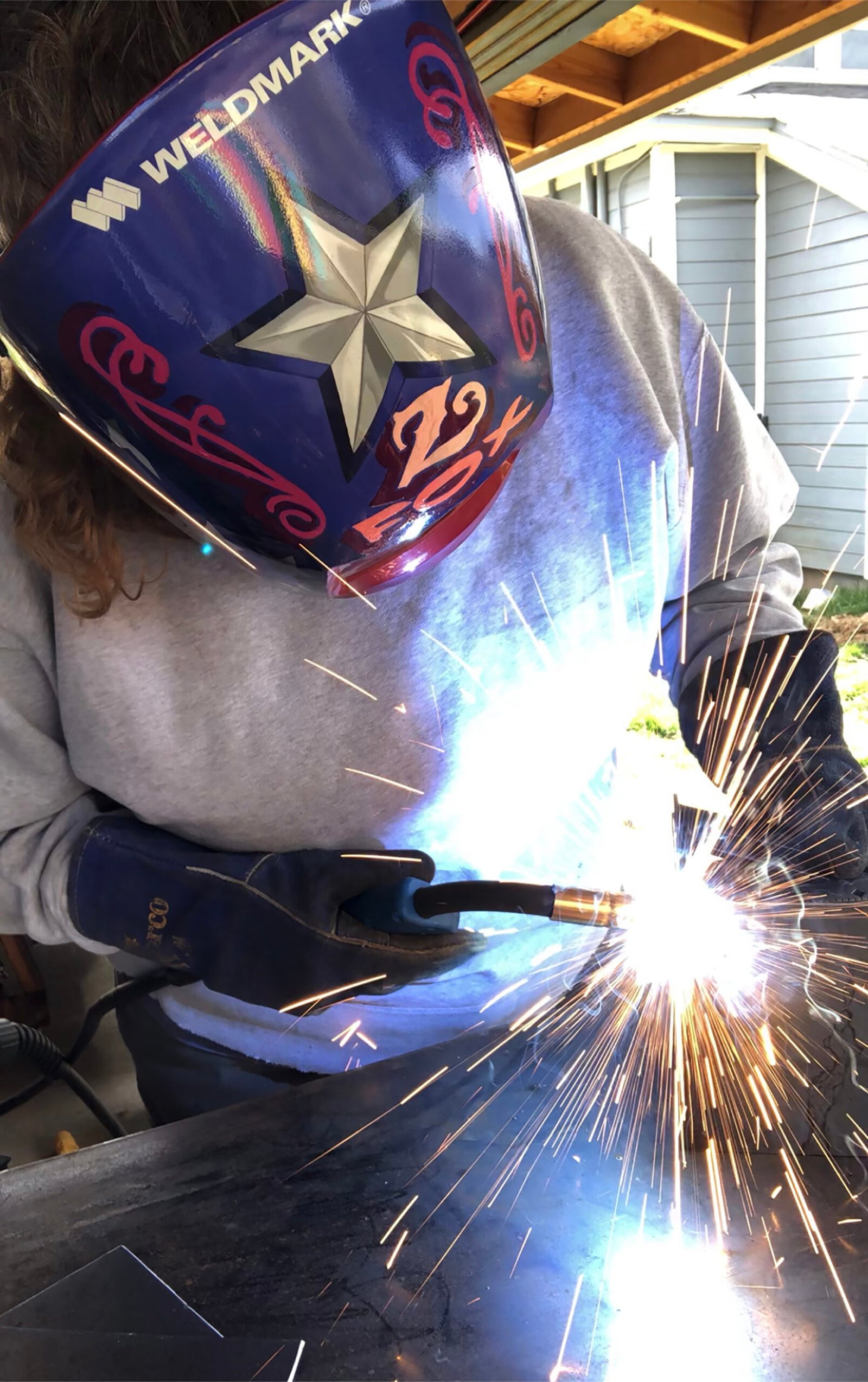
Steel is not a medium that many artists choose to work with. It’s heavy. It’s cumbersome. It demands specialized tools, proper training, and a healthy respect for safety protocols. It requires protective gear, loud machines, and an acceptance that you will never truly be clean while working with it. Steel dust finds its way into every crease of your clothing, embeds itself into your skin, and lingers long after you leave the studio. It is dirty—very, very dirty. And yet, despite all of these inconveniences and obstacles, I love it.
I love that steel is heavy. I love that it takes up space unapologetically. I love that it is bulky and awkward and resistant to being rushed or forced into submission. Steel demands patience. It requires intention. You do not casually manipulate steel; you negotiate with it. While I don’t love the grime that comes with the process, the end result makes it worthwhile. The finished surface is clean, sleek, and deliberate. The transformation from raw industrial material to refined form feels almost magical. And yes, the final product absolutely passes the vibe check.
Steel itself is not a singular thing but a vast family of materials, each with its own personality and purpose. There is stainless steel, prized for its resistance to corrosion and its clean, modern finish. Carbon steel, which is strong, affordable, and commonly used, carries a more industrial, utilitarian character. Alloy steels, engineered for specific performance traits, offer strength, flexibility, or resistance depending on their composition. Each type behaves differently under heat, pressure, and time.
Beyond type, steel comes in countless forms: sheet metal, flat stock, angle iron, square or round rod, tubing, and pipe. It exists in an equally wide range of thicknesses, each selected for structural integrity, aesthetic intent, or both. Every variation requires different methods for cutting, bending, welding, grinding, and finishing. Each step requires specialized tools—saws, torches, welders, grinders—and every one of those tools represents a significant investment of money, space, and skill. Steel is not a forgiving medium, nor is it an accessible one. It is expensive, demanding, and physically taxing.
So why choose steel?
The better question is: why wouldn’t I?
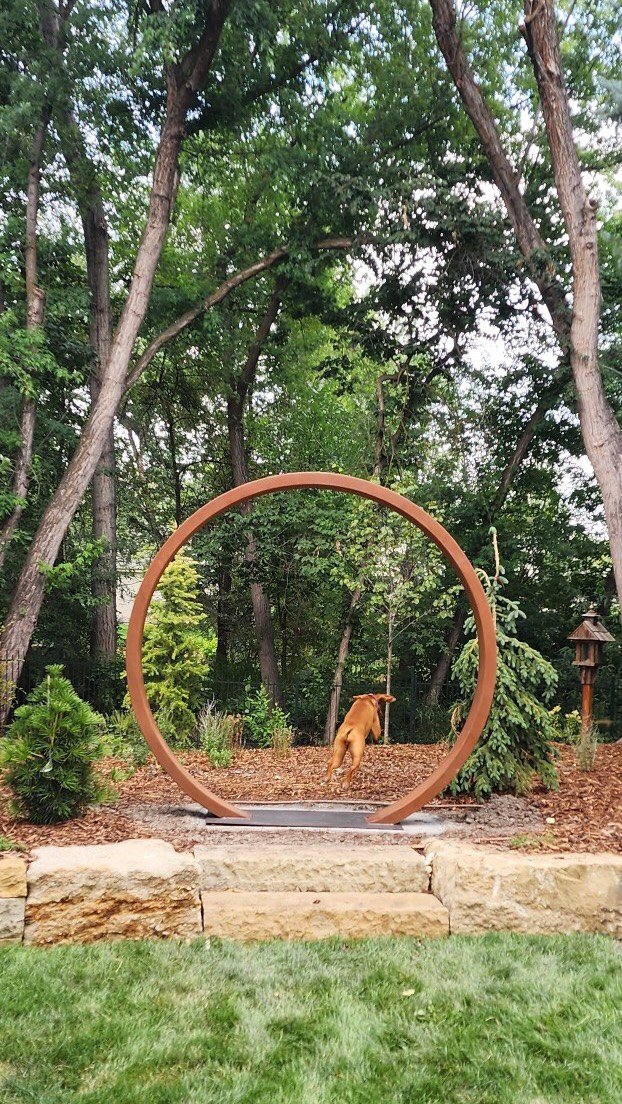
I choose steel because it refuses to be ignored. A steel sculpture, particularly one that exists at or near human scale, commands attention in a way that few other art forms can. When someone enters a space containing a person-sized steel sculpture, they cannot simply walk past it without acknowledgment. Unlike a two-dimensional painting that can be glanced at or overlooked entirely, sculpture insists on engagement. It occupies the same physical world as the viewer. It interrupts movement. It requires navigation.
There is something deeply instinctual about encountering a form that approximates the size of another human. We recognize it as having presence. We respond to it spatially, emotionally, and physically. We move around it. We feel its mass. We sense its weight even before touching it. In this way, sculpture becomes an experience rather than an image. I have never seen a painting command a room in quite the same way.
Steel amplifies that presence through both physical and visual weight. Its mass communicates seriousness. It anchors itself within a space, creating a focal point that alters the environment around it. Steel sculpture doesn’t feel temporary or delicate. It feels intentional and enduring. The weight leaves an impression on the viewer that lingers long after they have left the space, a memory of form and force that refuses to fade easily.
Another reason I am drawn to steel is its durability. Steel is not fragile. It does not demand a pristine, climate-controlled existence. It can live outdoors, exposed to wind, rain, snow, and sun. Rather than deteriorating, it often becomes more beautiful as it ages. Surfaces oxidize. Colors deepen. Textures evolve. Steel wears its history proudly, marking the passage of time rather than attempting to hide it.
In that way, steel feels honest. It coexists with its environment and with the people who encounter it. It survives. It is hearty, resilient, and steadfast—qualities I admire deeply.
There is also a more vulnerable truth embedded in my attraction to steel. I see myself reflected in it. Perhaps it is vain, or perhaps it is human, but I associate my own being with the material I work in. I, too, have weight—physical, emotional, experiential. I would like to believe that I have presence. My life has not been gentle, but it has shaped me into someone resilient. Like steel, I have been hardened by my environment, not in spite of it, but because of it.
Steel does not apologize for being what it is. It does not attempt to be lighter, softer, or more accommodating than its nature allows. Working with it has taught me to embrace those same qualities within myself. Strength does not require explanation. Presence does not require permission.
Finally, there is the matter of legacy. Steel endures. Long after I am gone, the work I create has the potential to remain—to exist in public and private spaces, to be encountered by people I will never meet. That idea carries immense weight for me. I hope my sculptures enrich the lives of those who live with them, even in small, quiet ways. I hope they become part of someone’s daily landscape, a constant companion rather than a fleeting moment.
And if I’m being honest, there is a small, tender hope tucked inside all of that ambition. I hope my children look at my work someday and think of their mom as someone who was pretty darn cool. Someone who made big, unapologetic things. Someone who took up space. Someone who left something behind that mattered.
Steel allows me to do all of that. It gives form to presence, permanence to intention, and substance to legacy. And that is why, despite its weight, its mess, and its demands, steel is the only material that feels honest enough to carry what I have to say.