BULT HEAVY, BUILT LATE
What is it like to start an art career when you are nearly old enough to qualify for the AARP discount? It’s hard. Really hard. But then again, most worthwhile things in life are hard, even when you are young. The difference is that aging has a way of waiting until you finally feel like you’ve figured things out—what brings you joy, what gives your life purpose—and then slipping a knife between your ribs and twisting it just as you raise your hands in victory for winning at life. At least, that’s how it feels for me.
I joined the United States Air Force at seventeen to escape what felt like a predetermined life in the rural corn rows of Indiana. I didn’t have a grand plan; I just knew I wanted more than what was in front of me. The military gave me structure, opportunity, and a sense of purpose that aligned with something bigger than myself. I spent my formative adult years learning how to be disciplined, dependable, and mission-focused, all while being paid well and traveling the world. I was shaped physically and mentally by that experience, and my military career remains one of the things I am most proud of. It laid the foundation for the person I am today.
While on active duty, I met my husband, a Navy Diver who would later retire from the Navy after a twenty four year career. Life moved quickly, as it tends to do in the military. I became pregnant with twins and, after nearly seventeen years of service, made the decision to separate from the Air Force to raise our children. Overnight, I went from Technical Sergeant Fullerton to Playgroup Captain. It was not a promotion. I traded global travel and professional identity for snack schedules and diaper bags. Although I loved being home and present for my children, I deeply missed having a purpose that was wholly mine—something that existed outside of motherhood and marriage.
Fast forward to 2018. My husband had been retired from the Navy for three years, and our children were old enough to function without constant supervision. We left San Diego for Boise, drawn to its balance of small-town accessibility and cultural growth. Boise also offered me something I hadn’t had in years: the chance to go back to school using my GI Bill benefits. It was during this transition that I realized creativity was the thing that truly ignited passion and brought joy into my life. I enrolled at Boise State University to pursue a Bachelor of Fine Arts in Visual Arts, focusing on sculpture.
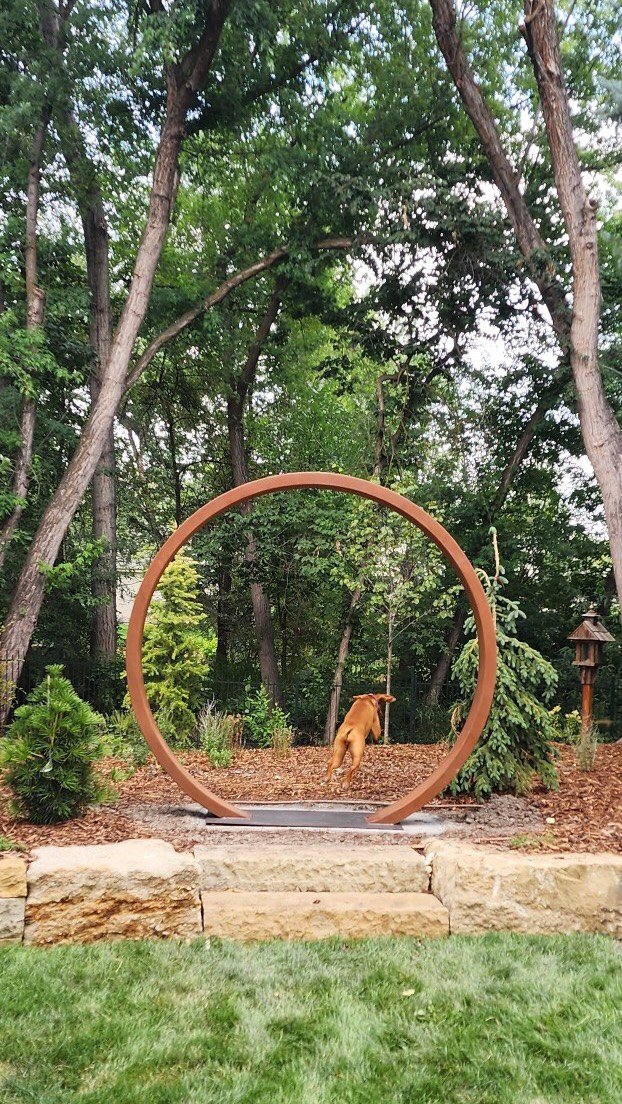
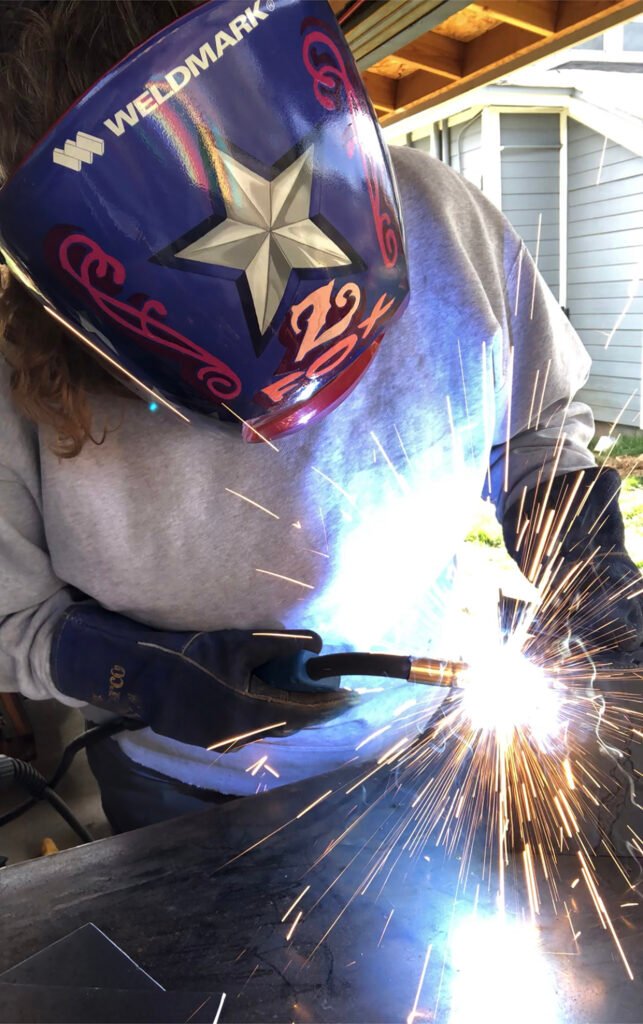
Art school cracked something open in me. I discovered that I was drawn to industrial waste steel pipe—discarded, heavy, unglamorous materials that carried their own histories. Transforming those materials into abstract sculpture felt intuitive and honest. I also discovered something else about myself: I like to work big. For me, “big” means roughly human-sized, between six and eight feet tall. Working at that scale brings a physical presence to the work, but it also comes with significant challenges. Steel is unforgiving. It is heavy, cumbersome, and demands respect.
I have always considered myself fairly strong. I was a competitive swimmer as a child and have maintained swimming throughout my life. Strength, however, changes as you age. Now in my mid-fifties, working with medium-sized steel sculptures tests my physical limits daily. After hours of grinding, sanding, or working with hand tools, my hands ache. Standing on concrete floors in work boots leaves my feet throbbing. My studio is outdoors, which means enduring Idaho’s hot summers and bitter winters. The environment takes its toll just as much as the labor itself.
Once a sculpture is complete, the challenges don’t end. These pieces are extremely heavy, and moving them—from studio to gallery, or even repositioning them within a space—is a production that requires planning, equipment, and the help of multiple able-bodied people. Each year, the physical limitations become more apparent, and I am acutely aware that there may come a time when my body will no longer allow me to work at this scale or with these materials.
Eventually, I will need to adapt. That may mean experimenting with new materials or processes as my body dictates what is possible. This transition will undoubtedly affect my artistic voice and body of work. While that prospect is intimidating, it is also an unavoidable reality. Art, like life, is shaped by limitation as much as possibility.
Another factor that weighs heavily on me as an aging, emerging artist is time. I do not have decades of experience or an extensive portfolio built over a lifetime. I am barely five years into this new career. Developing a cohesive body of work takes time—time to experiment, to fail, to refine ideas, and to discover what you are truly trying to say. I am building that foundation later in life, surrounded by artists who have been doing this work since their twenties. I have to rely on the quality and integrity of what I produce to speak for me, to establish my legitimacy in a community of professionals with long-established careers.
So what does all of this mean moving forward? Maybe it means my work won’t be valued until I’m gone—and even then, who knows. Fortunately, the monetary value of my work is not what drives me. What matters is the act of creating itself. Making art gives me purpose, challenges me, and keeps me engaged with the world. If a few people connect with what I create along the way, that only adds to its value.
I believe it is inevitable that an artist’s work changes as they age. Sometimes that change is driven by physical limitation; other times it comes from emotional growth, lived experience, or shifts in perspective. Whatever the cause, evolution is unavoidable. Rather than resisting it, I choose to embrace the undulations—like a child riding a roller coaster—hands up, eyes wide, fully aware that the ride is finite and all the more meaningful because of it.